How Having an Address Has Improved My Health: Nervous System Regulation & Moving
Bren Leclerc | SEP 3, 2024
How Having an Address Has Improved My Health: Nervous System Regulation & Moving
Bren Leclerc | SEP 3, 2024
Having recently settled into a semi-permanent home after spending 4+ years on the road, I have noticed significant improvements in my sleep, digestion, and menstrual cycles. Though there are many factors, I confidently claim that settling down and acquiring a permanent residence has increased my wellbeing and allowed me to go from surviving to thriving.
[Author’s Note: Can I start by acknowledging how fortunate I am, to have been able to find an affordable place to live long term, to have been born in a privileged country like Canada, and to be alive in a time with more human rights than ever before?
I’ve been holding off on sharing this story because it seems so trivial compared to the tens of thousands of people in Gaza murdered or struggling to survive. How can I talk about feeling unsafe while that is going on elsewhere?
I want to share my experience feeling first hand the effects of nervous system stimulation with and without the stability of a home base, in hopes that I can share some knowledge about nervous system function with you, and that that knowledge may improve your life or the life of someone you know. I’m counting on the ripple effect to spread some calm during this time. Thank you for understanding.]

In 2019 my husband and I joyfully set out to “live for free” in our fixed-up old RV. Recently married, our hearts were full and sights were set high. We would live on the road and continue working our jobs, and without the burden of a monthly rent payment, surely our savings accounts would quickly grow. We sought freedom: freedom from selling our time for money, freedom from the working-to-live trap, freedom to work and live remotely, and the luxury of changing our scenery whenever we chose.
Well, after some unexpected expenses (including a hefty surprise engine repair bill) and change of jobs at the beginning of the COVID pandemic, our first year of RV life didn’t go as we imagined! We got through just fine though, relocated to another part of the province, did some sightseeing in the Rockies, completed some online trainings, and took up seasonal work. Due to the pandemic and our limited income, spending the winters in Mexico or Southern US as we had envisioned was no longer a part of the plan - so we learned to partially winterize our RV, picking up many tricks to stay comfortably warm and with systems running through Canadian winters.
As the years passed and we spent nights in campgrounds, pull-outs, backroads, and city streets, we realized that the freedom we created for ourselves came at the cost of security. We felt the lifestyle starting to wear on us after the first 2 years.
Living partially off-grid also brought us much closer to survival. Being personally accountable for one’s electricity, water and waste management requires energy and attention, something I had never previously been responsible for. At first, this new awareness and connectedness was grounding, eye-opening, and fulfilling.
Eventually, the constant responsibility of managing water, power, waste, and finding a place to spend each night took about 30% of our available brain power. Holding that instability had a noticeable energetic and mental cost.
Living in a house/apartment is so easy! The water is always there in the tap, the toilet always flushes, the outlets always have electricity. That was not our reality in this life of ‘freedom.’
During this chapter we had many wonderful and once-in-a-lifetime experiences that we don’t regret. And, in some ways, life on the road had started to feel taxing. We continued doing what we could with what we had, and had begun looking for ways to settle down. We were sure that when the time was right, an opportunity for stability would present itself.
Throughout our time on the road, I had begun teaching yoga, and dove deeper into training and yoga studies. One area of focus was nervous system regulation - whether or not it is called by these words, this is a lot of what the practice of yoga is about. I practiced and taught dozens of nervous system regulation techniques, building up a collection of tools I could use to feel calm and grounded, to shift from ‘fight/flight’ back to neutral.
But no matter how many tools you have, if you don’t have a foundation or don’t feel safe, your nervous system will keep you on edge. That’s it’s job! Your autonomic systems are there to warn you of potential danger, and I had chosen a long term lifestyle that maintained a level of potential danger. (*please see author's note)
Thank you nervous system for doing your job. Fight/flight/freeze mode was, to one degree or another, activated throughout my time without an address, which makes sense. It’s good that this evolutionary safety tactic was working. I came to accept that a lifestyle involving more consistency and more conventional safety were necessary to turn off the alarms my body was sending me.
Perhaps a familiar psychological concept, the diagram below outlines the various levels of personal needs.
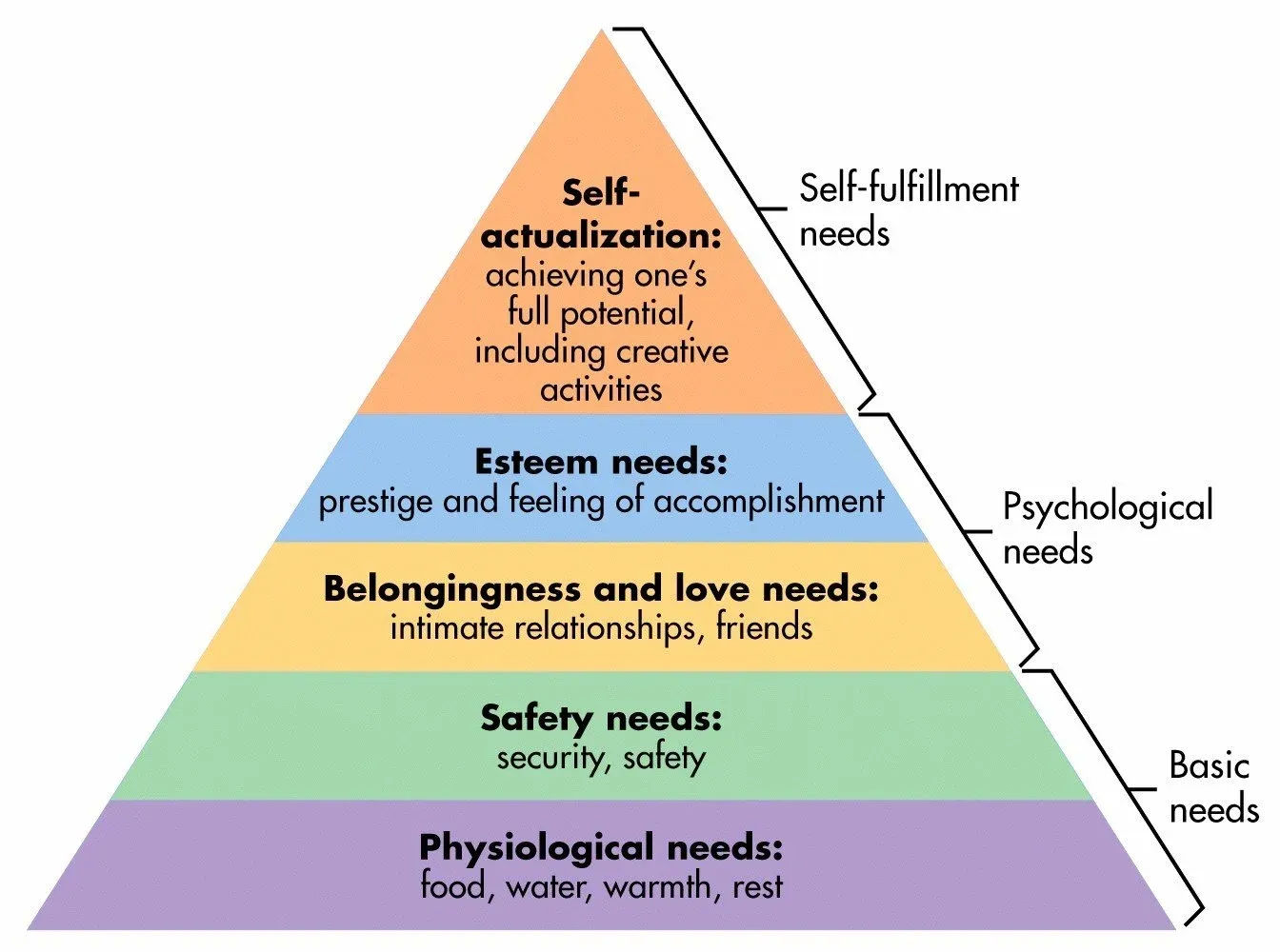
I’ve felt firsthand how hard it is to ‘get ahead’ when those bottom few sections of the pyramid aren’t present. One cannot thrive without first feeling safe and supported - by definition, they would be stuck in “survival mode.”
Our RV lifestyle meant that significant energy and time was taken up acquiring and managing water, finding a place to rest, and being very aware of our surroundings. “What was that noise, footsteps?” had a very different impact when inside my apartment vs when I'm staying on the side of the road.
The nervous system is this autonomic, evolutionary function that protects us from danger. When everything is working properly, it will alert us of threats, and then subside when no longer threatened. However, many folks experience “dysregulation” - being in fight/flight/freeze when there is no danger. When this dysregulation lasts a long time, many health disruptions can present.
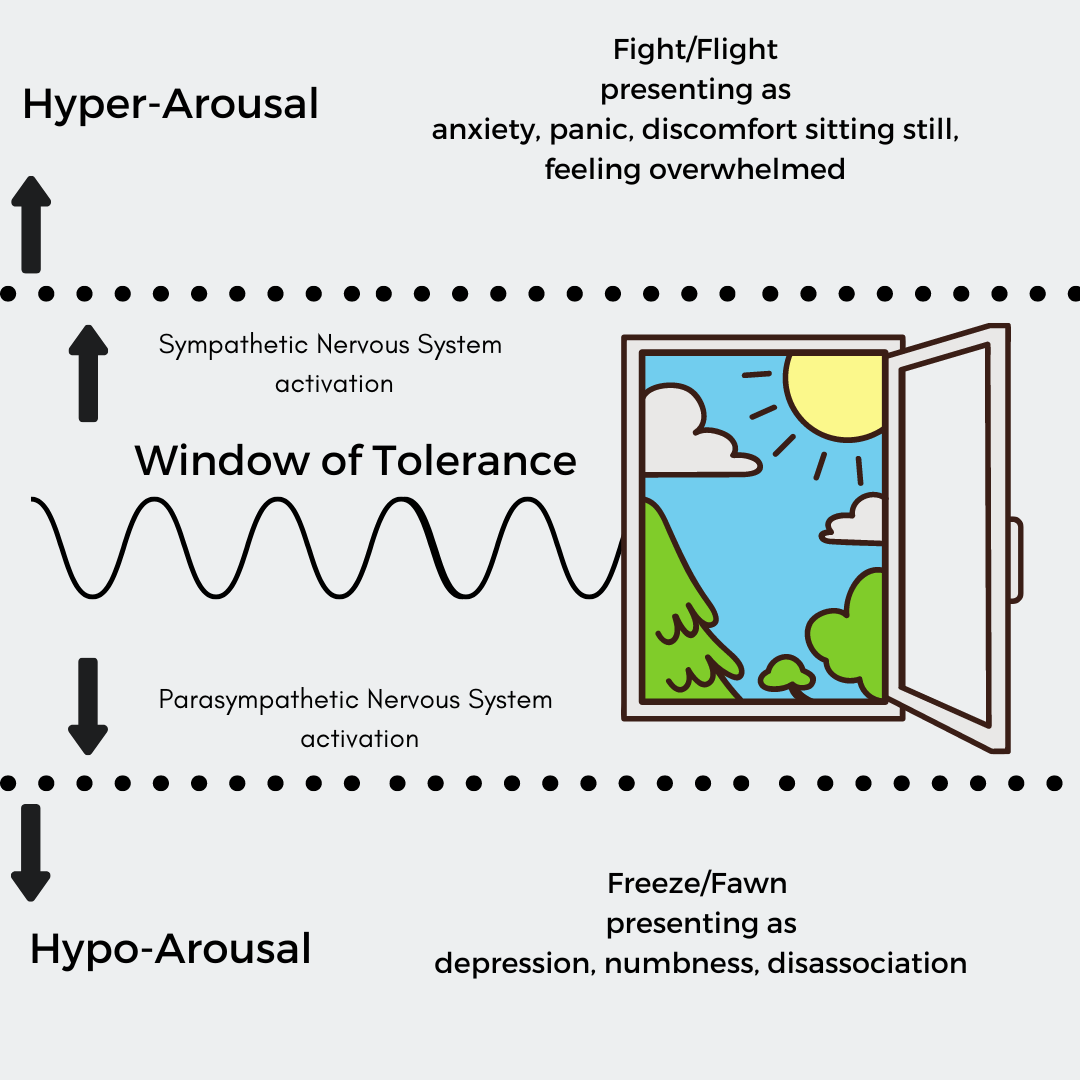
“Regulating” the nervous system can mean to bring one back to their window of tolerance, as shown in the diagram below. Noticing that you’re safe, and choosing to make your way towards neutral and away from extremes.
These are some methods I used while on the road and still use now. Feeling stressed or working through a transition? Try these:
Yawning is a physiological expression of vulnerability - it won’t happen when trying to escape from a predator, evolutionarily speaking. Some folks might trigger a yawn simply by thinking about yawning, or watching someone else yawn. I’ve yawned about 8 times just by typing out this paragraph!
One handy method is to keep your head still and facing forward (some gentle support from the hands to keep the head from turning can be helpful) and look with the eyes as far to one side as is comfortable, without turning the head. Keep looking to one side until you feel the urge to yawn, sigh, or swallow (or until a minute or two has gone by). Then try the other side. This practice helps to take us from fight/flight towards “rest & digest” mode.
I find this breath control practice to be helpful when I know I could benefit from some calm and stillness but I am feeling too amped up to be comfortable sitting quietly. Start with a three-part inhalation through the nose - inhale about halfway, inhale some more, inhale again filling up right to capacity - then exhale long and smooth through pursed lips, as if breathing out through a straw. Repeat this 3-5 times if you like.
Yogic practices involve building mindful self-awareness, and moving, breathing, or chanting with intention. Hundreds of individual ancient techniques have the potential to bring one from stressed and overstimulated to calm and in control.
If feeling stuck in panic mode, try some embodied movement - moving the hands or arms in time with your breath can be a really helpful way to reign in an active and scattered mind. Linked below are a couple of free practices from Youtube I would recommend.
Try This Moving Hands Meditation
Breath of Joy Movement Pattern
Once we had moved into our long term residence and unpacked what had been in storage, I felt a profound softening. I had some of the deepest sleep I’d had in years, and was thrilled to feel additional ‘brain space.’ That 30% of brain power reserved for basic needs was now available - what a gift. My stress tolerance grew, and I realized that I had spent years near or at maximum capacity.
Besides sleep, my digestion and monthly cycles have also noticeably improved. Unsurprisingly, these are all conditions that can be affected by stress.
I don't regret that time spent on the road - many lasting memories were made in the unique situation we created for ourselves. Now, I am grateful to be in a position to thrive.
To practice a variety of nervous system regulation techniques and to learn more about self-regulation, this minicourse is available to you!
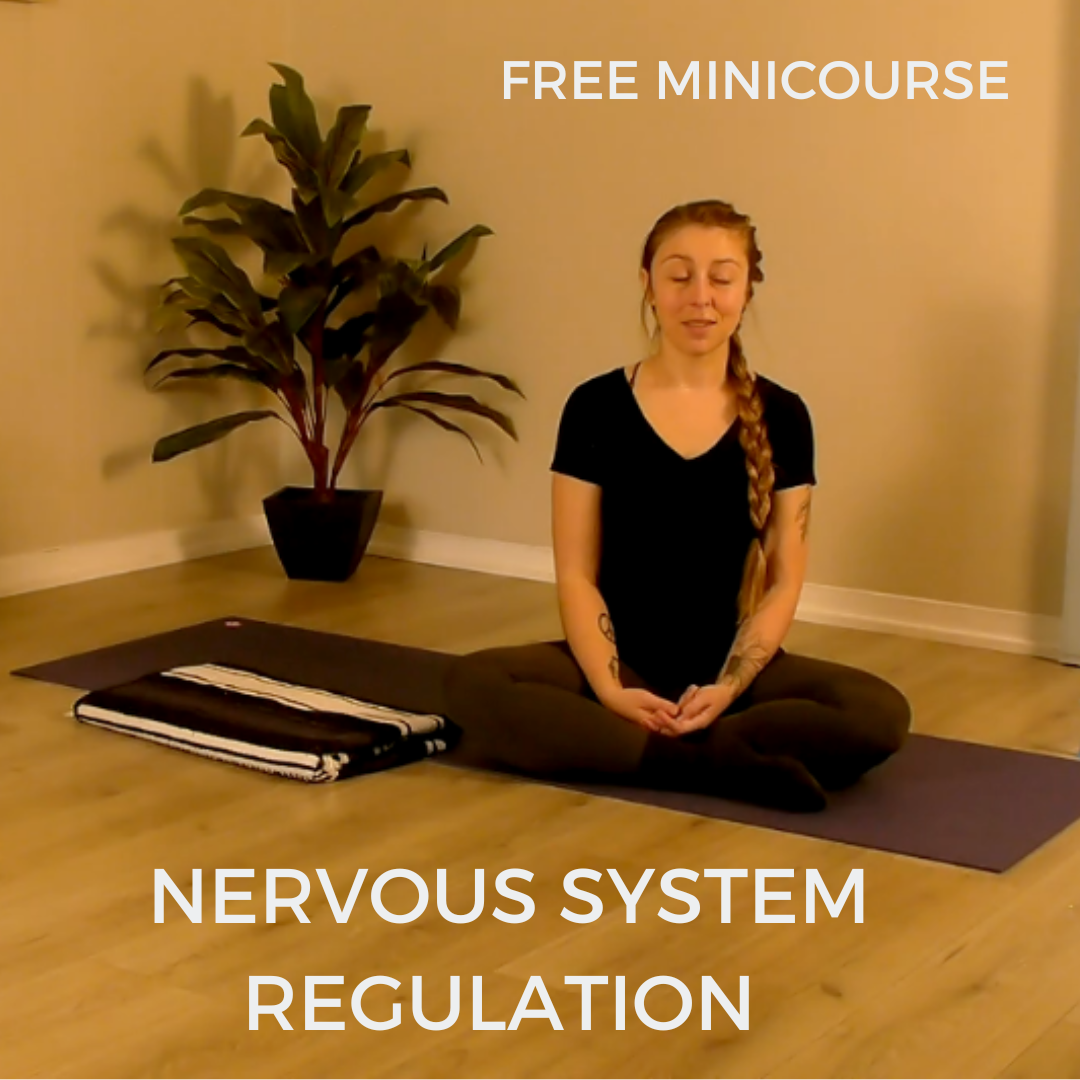
This is a 7-day minicourse presented via email. To learn more, click the link below.
https://practicewithbren.ck.page/d82ec237af
Want more from Bren?
Video-On-Demand Yoga Class Library
___________________________________________________________________________________
Bren Leclerc | SEP 3, 2024
Share this blog post